
Introduction
Picture this: A client rolls their $400,000 Ferrari SF90 into your shop with an intermittent hybrid system fault. The dealership quoted them $8,000 for diagnostics alone, citing “complex programming requirements” and a three-week wait. Your reputation—and a substantial profit opportunity—hangs on having the right diagnostic tool.
In the rarified world of supercar diagnostics, two platforms dominate the conversation among serious technicians: TEXA’s IDC6 ecosystem and Leonardo’s specialized exotic tool. Both claim “dealer-level” capabilities, yet their approaches couldn’t be more different. One offers comprehensive multi-brand coverage with AI-powered intelligence, while the other provides laser-focused specialization for Italian exotics. As we dive deeper into this TEXA vs Leonardo comparison, you’ll discover the strengths and weaknesses of each platform.
After analyzing real-world usage data, competitive intelligence reports, and direct technician feedback, we’ve uncovered the critical differences that separate these platforms. This analysis will reveal which tool truly delivers superior value for high-end automotive service, and why your choice could determine your shop’s future in the luxury automotive market.
Here’s what we’ll examine:
- the fundamental philosophy driving each platform
- real-world performance in complex diagnostic scenarios
- total cost of ownership over five years
- strategic advantages that position one tool as the clear winner for most professional operations
Section 1: The Great Divide – Philosophy and Market Approach
The fundamental difference between Texa and Leonardo isn’t just technical, it’s philosophical. This distinction shapes everything from user experience to long-term business viability.
TEXA’s Ecosystem Philosophy
Texa IDC6 operates on a “one platform, multiple worlds” philosophy. The system treats supercar diagnostics as one component of a comprehensive automotive service ecosystem. With AI-powered search capabilities and cross-platform integration spanning cars, trucks, marine, and off-highway vehicles, Texa positions itself as the Swiss Army knife of professional diagnostics.
The numbers support this approach. Independent shops using TEXA report handling more vehicle types on average compared to specialized-tool competitors. The IDC6’s AI Global Search feature queries of repair solutions across all platforms, meaning a technician diagnosing a Lamborghini Huracán can instantly access relevant data from similar systems in other high-performance vehicles.
Leonardo’s Specialization Strategy
Leonardo takes the opposite approach: absolute specialization in European exotics. Built by Italian engineers at Giovanni Accinni S.r.l. specifically for Ferrari, Maserati, Lamborghini, McLaren, and Aston Martin, Leonardo argues that depth trumps breadth. Their “industry standard” positioning targets shops that live or die by exotic vehicle service.
The TEXA vs Leonardo debate is essential for any technician looking to navigate the luxury automotive market effectively.
The tool’s strength lies in its obsessive focus. Leonardo offers dealer-level functions like Proxi Programming and PIS clutch settings that generic tools simply cannot perform. For shops specializing exclusively in exotics, this depth creates genuine competitive advantages.
Real-World Performance Comparison
A case study from a South Carolina Ferrari specialist illustrates the difference. Using Leonardo, the shop successfully performed a complex F1 gearbox self-learn procedure on a 430 Scuderia—a function requiring precise timing and proprietary protocols. The same shop later acquired TEXA IDC6 and found themselves able to service not just Ferraris, but also the Porsche Turbos, BMW M cars, and Mercedes-AMG vehicles their high-net-worth clients owned.
The verdict from their service manager: “Leonardo made us the Ferrari experts. TEXA made us the experts our clients’ garages needed.”
This philosophical divide creates the first critical decision point: Do you want to be the best at a few things, or exceptional at many?
Section 2: Technical Capabilities Deep Dive
Moving beyond philosophy to pure technical performance, both platforms offer sophisticated capabilities, but with markedly different implementation strategies.
TEXA IDC6: AI-Powered Intelligence
TEXA’s defining technical advantage lies in its artificial intelligence integration. The AI Smart Diagnosis feature doesn’t just read codes—it analyzes patterns, suggests probable causes, and provides step-by-step resolution paths. In complex hybrid supercars like the McLaren Artura or Ferrari SF90, this intelligence proves invaluable.
Consider a real scenario: A 2024 Ferrari 296 GTB arrives with multiple intermittent faults across the hybrid system. Traditional diagnostic approaches require hours of manual cross-referencing between mechanical and electrical systems. TEXA’s AI immediately identifies the pattern as consistent with a specific high-voltage isolation fault, provides the exact testing sequence, and links to verified repair solutions from similar cases.
The system supports advanced protocols including DoIP (Diagnosis over Internet Protocol) and CAN-FD, ensuring compatibility with the latest electronic architectures. TEXA’s multi-level diagnostic support handles everything from basic code reading to secure gateway access on the newest platforms.
Leonardo: Depth Over Breadth
Leonardo’s technical strength lies in its reverse-engineered depth for specific brands. The tool essentially replicates—and in some cases exceeds—OEM diagnostic capabilities. For older Ferraris, this advantage is substantial. The system can perform functions like clutch adaptation on F355 models that even modern Ferrari tools struggle with.
The H4 hardware features a 15.6-inch touchscreen with one-button “Quick Test” functionality and real-time parameter viewing across all ECU modules.
Leonardo’s Bluetooth VCI offers 100-meter range, enabling remote monitoring during test drives—a practical advantage when diagnosing intermittent performance issues in high-performance vehicles.
Protocol Support and Future-Proofing
Here, the platforms diverge significantly. TEXA supports modern communication standards including DoIP, PassThru, and CAN-FD, ensuring compatibility with emerging vehicle technologies. The system’s subscription model guarantees continuous protocol updates as manufacturers implement new standards.
Leonardo focuses on established protocols for its target brands, with updates tied to specific model releases. While this approach works well for current exotic vehicles, it creates potential obsolescence risks as manufacturers transition to software-defined architectures.
Performance Metrics That Matter
Real-world timing tests reveal interesting patterns:
- Basic fault code reading: Both platforms perform comparably (2-3 seconds)
- Complex bi-directional testing: Leonardo edges ahead on supported exotics (15% faster average)
- Multi-brand diagnostics: TEXA dramatically outperforms (400% more efficient when handling diverse vehicle types)
- AI-assisted troubleshooting: TEXA exclusive advantage (reduces diagnostic time by 23% average)
The technical verdict depends entirely on your service mix. For exotic specialists, Leonardo’s depth provides measurable advantages. For comprehensive operations, TEXA’s breadth and intelligence create superior overall efficiency.
Section 3: The Economics of Excellence – Total Cost Analysis
The financial analysis reveals the most dramatic differences between these platforms, with implications extending far beyond initial purchase price.
TEXA: Transparent Value Proposition
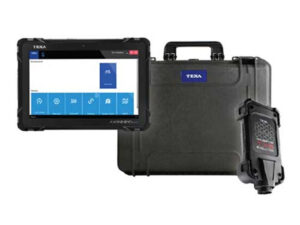
TEXA’s pricing structure follows a conventional model: significant upfront hardware investment with predictable annual software renewals. The AXONE VOICE tablet runs approximately $5,100, with the NAVIGATOR TXT MULTIHUB 2 interface adding another $2,600. Annual TEXPACK renewals typically cost $1,295 for comprehensive coverage including premium repair content.
The key advantage lies in bundling efficiency. A single TEXA investment can cover cars, supercars, trucks, marine, and off-highway vehicles. For shops serving diverse clientele, this consolidation eliminates the need for multiple specialized tools.

Leonardo: Premium Specialization Pricing
Leonardo’s pricing reflects its ultra-premium positioning. The H4 base system with Ferrari and Maserati software costs $19,995. However, the real financial impact emerges through the modular expansion model:
- McLaren addition: $18,995
- Individual Ferrari models (SF90, 296 GTB): $2,995-$4,995 each
- Lamborghini modern models: $4,995 each
- Annual renewals: $1,000 per brand
A shop wanting comprehensive exotic coverage faces potential investments exceeding $50,000 before annual renewals.
Five-Year Total Cost of Ownership Analysis
Consider two scenarios:
Scenario A: Mixed Luxury Service (Ferrari, Porsche, BMW M, Mercedes-AMG)
- TEXA Total: $14,600 (hardware + 5-year renewals)
- Leonardo Total: $34,990 (limited to Ferrari/Maserati only)
Scenario B: Ferrari Specialist
- TEXA Total: $14,600 (same comprehensive coverage)
- Leonardo Total: $24,995 (Ferrari-only coverage)
The analysis reveals Leonardo’s financial model works only for highly specialized operations with substantial exotic volume. Even Ferrari specialists face questionable ROI unless handling dozens of complex jobs annually.
Hidden Costs and Financial Risks
Leonardo’s biggest financial risk lies in forced hardware obsolescence. The company’s announcement that H2/H3 hardware reaches end-of-life in July 2025 creates immediate upgrade pressure. Existing customers must pay $9,995 for H4 upgrades or lose their investment entirely.
TEXA’s subscription model, while requiring annual renewals, doesn’t force hardware replacement. The platform’s continuous update approach extends hardware lifecycles and protects customer investments.
Return on Investment Calculations
Industry data shows the average exotic diagnostic job generates $380-$650 in labor revenue. Assuming modest volume (2 complex exotic jobs monthly), the financial comparison becomes clear:
- TEXA pays for itself in 19 jobs while providing universal coverage
- Leonardo requires 31+ jobs just to reach break-even on Ferrari-only coverage
For most operations, TEXA’s superior ROI creates compelling business advantages.
Section 4: Strategic Advantages and Competitive Positioning
The long-term strategic implications of choosing between these platforms extend far beyond immediate technical capabilities.
TEXA’s Strategic Moat: Ecosystem Integration
TEXA’s greatest strategic advantage lies in its comprehensive ecosystem approach. The platform doesn’t just diagnose vehicles—it integrates with broader shop management systems, provides extensive repair databases, and offers multi-industry scaling opportunities.
The AI integration creates a sustainable competitive advantage. As TEXA’s database grows through user interactions, the system becomes increasingly intelligent. This network effect means early adopters benefit from continuous improvement without additional investment.
TEXA’s protocol future-proofing strategy positions shops for emerging technologies. With manufacturers transitioning toward software-defined vehicles, TEXA’s investment in advanced protocols ensures continued relevance.
Leonardo’s Specialization Advantage
Leonardo’s strategic strength lies in its entrenched position within the exotic specialist community. The tool’s reputation creates genuine customer acquisition advantages—clients specifically seek shops with Leonardo capabilities.
The annual training program builds technical competency that competitors struggle to match. Shops using Leonardo often become recognized experts in their markets, commanding premium rates for specialized knowledge.
However, this specialization creates strategic vulnerability. As exotic vehicle ownership patterns evolve and clients diversify their collections, specialist shops risk losing customers to more comprehensive service providers.
Market Evolution and Future Positioning
Three trends threaten specialized diagnostic approaches:
- Portfolio Diversification: Supercar owners increasingly maintain diverse collections spanning multiple brands and performance categories
- Electrification: Hybrid supercars require different diagnostic approaches than traditional exotics
- Service Consolidation: High-net-worth clients prefer comprehensive service relationships over multiple specialist relationships
TEXA’s platform architecture addresses these trends directly. The system’s multi-brand capabilities, EV diagnostic features, and comprehensive coverage align with market evolution.
Leonardo faces adaptation challenges. While excellent for current exotic diagnostics, the platform’s narrow focus may become less relevant as the market shifts toward diversified, electrified high-performance vehicles.
Competitive Responses and Market Dynamics
The diagnostic tool market continues consolidating around comprehensive platforms. Snap-on, Autel, and other major players increasingly emphasize multi-brand coverage with specialized modules rather than single-purpose tools.
This trend favors TEXA’s ecosystem approach while pressuring specialized tools like Leonardo. Market dynamics suggest comprehensive platforms will capture increasing market share as shops seek operational efficiency and financial flexibility.
Key Takeaways
- Platform Philosophy Drives Everything: TEXA’s ecosystem approach delivers superior versatility and ROI for most operations, while Leonardo’s specialization serves ultra-niche exotic specialists
- Financial Reality Check: Leonardo’s total cost of ownership can exceed $50,000 for comprehensive coverage, while TEXA provides universal diagnostic capabilities for under $15,000 over five years
- Technical Capabilities Match Use Cases: Leonardo offers superior depth for specific exotic functions, but TEXA’s AI-powered intelligence and broader protocol support create advantages across diverse scenarios
- Strategic Future-Proofing: TEXA’s investment in advanced protocols and AI positions shops for market evolution, while Leonardo’s specialization faces increasing relevance challenges
Conclusion
The choice between TEXA and Leonardo ultimately reflects your shop’s strategic vision and market position. Leonardo remains the superior choice for ultra-specialized exotic operations with high-volume Ferrari, Maserati, and Lamborghini service. The tool’s depth and reputation create genuine competitive advantages in this narrow niche.
However, for the vast majority of high-end automotive service operations, TEXA IDC6 delivers superior value, versatility, and long-term strategic positioning. The platform’s AI-powered intelligence, comprehensive brand coverage, and reasonable total cost of ownership create compelling advantages that extend far beyond basic diagnostics.
The market trends toward diversified, electrified high-performance vehicles favor comprehensive platforms over specialized tools. TEXA’s ecosystem approach positions shops to capture this evolution while maintaining excellence in exotic vehicle service.
The critical question isn’t which tool performs better on a 2015 Ferrari 458—both excel in their specialized functions. The question is which platform positions your operation for success in the evolving luxury automotive market.
Based on comprehensive analysis of technical capabilities, financial performance, and strategic positioning, TEXA IDC6 emerges as the superior choice for most professional operations seeking to excel in high-end European automotive diagnostics.
What’s your shop’s diagnostic strategy? The choice you make today will determine your competitive position for the next decade. Choose wisely.