The EPA 2027 emissions rule kicks in January 1, and the details still aren’t settled. The new NOx limit is locked in. The relief EPA proposed in July is not.
Here’s what’s fixed, what’s not, and what it means for your bays.
What’s Locked In for January 1
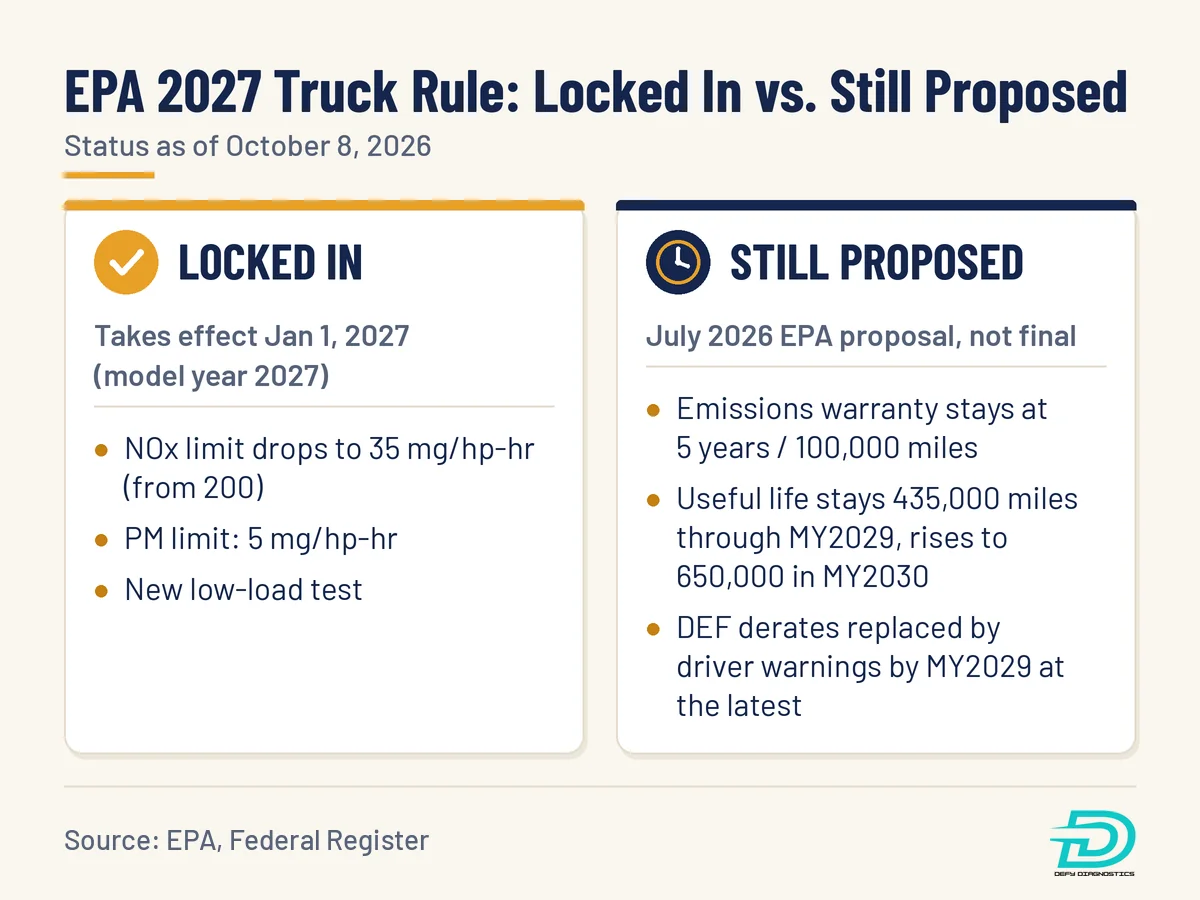
35 mg/hp-hr NOx. Model year 2027 heavy-duty engines must meet it, down from 200 mg/hp-hr today. That’s a cut of more than 80%.
Tighter PM limit. The particulate standard drops to 5 mg/hp-hr, half of today’s limit.
A new low-load test. Diesel engines now have to stay clean at idle and light load too, not just on the highway. That matters for vocational, municipal, and stop-and-go trucks.
EPA announced the changes July 9 and closed comments August 29. As of October 8, there’s no final rule. Here’s what’s on the table:
Shorter emissions warranty. Heavy heavy-duty engines would keep today’s 5-year/100,000-mile coverage instead of the 450,000-mile coverage in the 2023 rule. EPA estimates up to $6,000 in savings per new truck.
Useful life pushed to 2030. Heavy engines would stay at 435,000 miles through MY2029, then move to 650,000 miles in MY2030.
Warnings instead of DEF derates. New engines would use visible or audible alerts instead of power derates and speed limits. Makers would have to switch no later than MY2029 and could switch sooner. Derates to prevent catastrophic engine damage would still be allowed.
Nonconformance penalties. Engine makers could keep selling engines that miss the new NOx standard by paying a per-engine penalty.
Why OEMs Say the Clock Is Out
“We’re nearly out of time at this point,” Daimler Truck North America’s Dan Potter told Transport Topics. “Trucks have to be in production in January.” DTNA is certifying to the rules on the books and will adjust once EPA finalizes.
Other OEMs differ. FleetOwner reports Cummins, PACCAR, and Volvo Group plan to lean on the proposed penalties while they ramp up compliant engines. DTNA opposes them. (MOTOR breaks down each strategy.)
What It Means for a Mixed Fleet
Most fleets will soon run three engine generations at once.
Pre-2010 trucks generally predate SCR and DEF, which EPA notes arrived with MY2010. Your tool still has to talk to them.
2010 to 2026 trucks run SCR, DEF, NOx sensors, and DPFs. The proposal covers new engines, so today’s derates stay unless an OEM updates the software. EPA has issued guidance encouraging those updates, including a March 2026 note on swapping urea quality sensors for NOx sensors (EPA fact sheet). Ever chased a 5 mph derate? You know the pain.
2027 and newer trucks bring updated engine platforms. Depending on the final rule, a 2027 truck could carry a fully compliant engine or a carryover engine sold under a penalty.
If the shorter warranty goes through, more aftertreatment repairs land on your budget sooner. That makes in-house diagnostics worth more, not less.
Diagnostic Coverage Is Your Hedge
Whatever EPA finalizes, the faults look the same: DEF quality and dosing, NOx sensor readings, SCR efficiency, DPF soot load, and forced regens. You need one tool that reads all three generations, plus current software so new engines are covered as updates come out.
Does the EPA 2027 emissions rule still start January 1, 2027?
Yes. The 35 mg/hp-hr NOx standard applies to model year 2027 heavy-duty engines, and EPA’s July proposal keeps it.
Is the shorter emissions warranty final?
No. As of October 8, 2026, EPA had not finalized its July proposal. It would keep the current 5-year/100,000-mile warranty for heavy heavy-duty engines.
Will 2027 trucks stop derating for DEF problems?
Not necessarily right away. The proposal requires warnings instead of derates no later than model year 2029 and lets manufacturers switch sooner.
Do the changes affect trucks I already own?
The proposal covers newly built engines. For trucks already in service, EPA is only considering guidance, so current derate behavior stays unless your OEM updates the software.
Get Your Shop Ready for 2027
The TEXA Axone Nemo Plus Truck Kit pairs a rugged tablet with the Navigator TXT Multihub2 and IDC6 Truck software, pre-configured and ready to work. Run DPF regens and bi-directional tests across the major truck brands from one kit. Check our Specials page for current offers.
Diesel averaged about $6.32 a gallon this week, according to AAA.
On October 5, the president signed an executive order that waives federal penalties for running red-dyed diesel, the tax-free fuel normally reserved for farm and construction equipment, in highway vehicles, once the IRS announces it (due by October 10). It also defers, but does not cut, the federal diesel excise tax on that fuel.
Here is what actually changed, in plain terms.
What the order does
The window runs October 5 through December 31, 2026. Both parts come with a condition.
Penalty relief: the IRS must announce it won’t impose federal dyed-fuel penalties for highway sale or use during that window. That announcement is due by October 10. Until then, it is not official.
Tax deferral: Treasury has until October 10 to confirm its legal authority. If it does, the tax gets pushed back, with interest and penalties waived to the extent authorized by law.
That is cash-flow relief now, not a tax cut. It is still owed later unless Treasury forgives it, and the order only asks Treasury to explore that.
The catches
The catches, because there are some.
First, and this is the big one for interstate fleets, the federal order does not touch state fuel taxes or penalties. Ten states acted before it, including North Carolina, Alabama, Texas, and Oklahoma, according to ClearView Energy Partners via CNN. Nebraska and Louisiana did too. Most of those orders cover only farm or timber vehicles, so general-freight fleets often don’t qualify.
Since the order, Iowa issued an October 6 proclamation for hauling farm products only. Tennessee paused enforcement for farm and forestry use through October 31. Mississippi is simply not enforcing its rule, with no formal order.
Texas kept its 20-cent state tax in place, so red diesel on Texas highways still owes the state. We have not seen South Carolina act as of this writing (October 6). Check every state on your routes before you plan around this.
Second, availability. Not every truck stop stocks dyed diesel, and the order has the Agriculture Department working with co-ops and rural distributors to keep farmers supplied in high-demand areas. Call your fuel supplier first.
Third, federal fuel rules. EPA rules still cap highway diesel at 15 ppm sulfur and prohibit visibly dyed fuel on the road unless EPA issues a waiver. None had been issued as of October 6. Ask your supplier whether their dyed fuel meets the 15 ppm limit.
Fourth, it ends December 31. After that, the normal rules come back.
What to do now
Ask your fuel supplier about dyed diesel availability and sulfur content on your routes. Track which states follow the federal lead.
And watch for Treasury’s guidance and the IRS announcement, both due October 10, plus any EPA waiver. They decide how real this relief is.
Fuel at $6.32 is brutal. At any price, though, the truck that matters most is the one that is running. A sidelined truck costs more than the tank.
Federally, dyed-fuel penalties for highway use are waived through December 31, 2026, once the IRS issues its announcement, due by October 10. EPA and state rules still apply.
How much can my fleet save?
The federal diesel tax is 24.4 cents per gallon, about $60 on a 250-gallon fill. It is deferred, not cut, so it is still owed later unless Treasury forgives it.
Is the federal tax gone for good?
No. The order defers it. Treasury must confirm its legal authority by October 10 and is exploring whether the tax can be eliminated, not just postponed.
Do I still owe state fuel tax?
Probably. The federal order changes nothing at the state level, and many state orders cover only farm or timber vehicles. Check each state your trucks run in.
Your customers’ cars are watching the road even when they aren’t paying attention. Lane-keep cameras, adaptive cruise radar, blind-spot sensors, most vehicles rolling into your bays today have at least one of these systems, and every one of them needs recalibration the moment something disturbs it.
Windshield replacement. Bumper repair. Wheel alignment. Suspension work. A new set of tires. All of it can throw ADAS out of spec, and an uncalibrated system isn’t just a warning light on the dash, it’s a safety system that can’t do its job.
Here’s the question: is your shop doing those calibrations, or are you sending that work (and that money) somewhere else?
The market is moving whether you are or not
A few numbers worth sitting with:
The global fleet of ADAS-equipped vehicles passed an estimated 420 million by the end of 2025 and is projected to top 900 million by 2034.
Windshield replacement alone triggers a recalibration in roughly 68–73% of ADAS-equipped vehicles.
One major auto glass company reported a 30% year-over-year jump in ADAS calibrations in 2026, with over 40% of its front windshield jobs now including a calibration.
Average revenue per calibration event is up about 18% since 2022, as multi-sensor vehicles keep replacing single-sensor ones.
Translation: the calibration work is being generated by jobs you’re probably already doing. The only question is whether you bill for it.
What the TEXA RCCS3 actually is
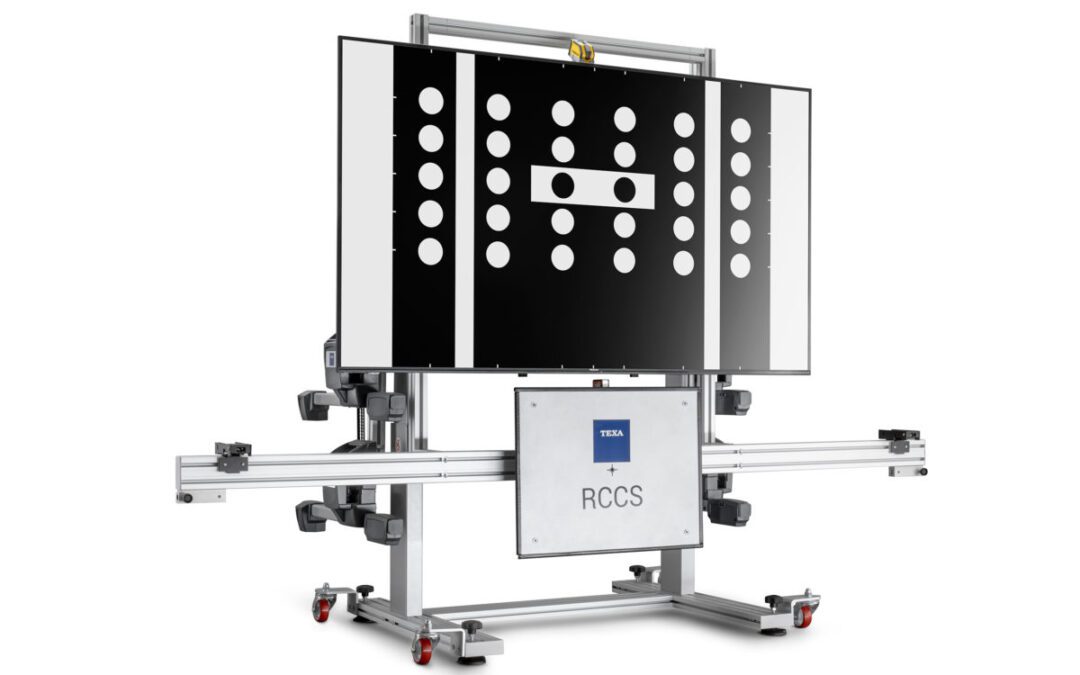
The RCCS 3 EVO is TEXA’s answer to the biggest headache in ADAS work, the wall of physical calibration targets. Traditional systems need you to store, identify, and position dozens of manufacturer-specific panels. The RCCS3 replaces all of that with one 75-inch 4K display that renders every target digitally, in true 1:1 proportion, exactly to each manufacturer’s spec. No deformed or resized images. No guessing which panel goes where.
It handles static and dynamic calibrations for radar, LiDAR, cameras, and sensors, and it talks directly to TEXA’s IDC6 software, which walks your technician through the whole procedure step by step, with help sheets written for the specific vehicle on the lift.
The hardware details that matter in a real shop:
Electrically adjustable height, tilt, and millimetric side movement
Self-centering wheel clamps for 13″–24″ tires
Laser alignment tools for vehicle centering and front radar aiming
Secure Gateway access for FCA/Stellantis, Renault, Kia, VAG, Mercedes, and more
Continuous software updates that add vehicles and targets as coverage grows
It’s the kind of tool that turns ADAS from a job you avoid into a service line you advertise.
What you need to run it
The RCCS3 is the calibration rig, it doesn’t replace your scan tool. To run calibrations, you need an IDC6 Car software license and a TEXA vehicle communication interface (VCI), or a complete car package that includes both.
You’ve got options at different price points:
Axone Nemo Light Car with Nano S2 VCI ($3695) the most budget-friendly way in. Compact tablet, wireless Nano S2 interface, full IDC6 Car diagnostics.
Any TEXA car package works the RCCS3 just needs that IDC6 Car license and a TEXA VCI to talk to the vehicle. If you already own a TEXA car setup, you’re most of the way there.
The part that changes the math: free in-shop setup and training
Here’s the real news. Through December 31, 2026, every RCCS3 purchase includes free in-shop setup and hands-on training, led by a factory TEXA rep, in your shop.
That means:
Unboxing and assembly: the system shows up, and it’s put together right, the first time
Full setup and installation: positioned, configured, and verified in your actual bay
Hands-on technician training for two of your techs: not a webinar, not a manual. Real training, on real vehicles, in your shop, from a actual Texa trainer
This is a factory-backed TEXA promotion, and Defy Diagnostics is offering it on every RCCS3 we sell through the end of the year.
If you’ve ever priced ADAS equipment and stalled on the same question, “who’s going to learn this thing?”, this answers it. The number one reason calibration rigs gather dust is that nobody on staff feels confident running them. A factory rep spending the day in your shop, training your two lead techs on your own vehicles, removes that barrier completely. Day one, your team knows the workflow. Day two, you’re billing calibrations.
A quick word on your facility
ADAS calibration does ask something of your shop space: a flat, level floor, good flicker-free lighting, and enough clear room around the vehicle. Nothing exotic, most well-kept shops are close already. We wrote a full breakdown of facility requirements here: ADAS Calibration Requirements for Shops.
Frequently asked questions
What is the TEXA RCCS3? The TEXA RCCS 3 EVO is a digital ADAS calibration system. It uses a 75-inch 4K display to render manufacturer calibration targets in true 1:1 proportion, replacing stacks of physical target panels. It performs static and dynamic calibrations for radar, LiDAR, cameras, and sensors, with step-by-step guidance from TEXA’s IDC6 software.
What do I need to run the RCCS3? An IDC6 Car software license and a TEXA vehicle communication interface (VCI), or a complete TEXA car package. The Axone Nemo Light Car package with the Navigator Nano S2 VCI is the most budget-friendly entry point. Any TEXA car package works.
What does the free setup and training include? Through December 31, 2026, RCCS3 purchases include in-shop unboxing, assembly, setup, and installation, plus hands-on training for two technicians, led by a factory TEXA representative.
How long is the offer valid? The free in-shop setup and training promotion runs through December 31, 2026.
Ready when you are
The ADAS work is already in your bays. The equipment is proven. And through the end of 2026, the setup and training, usually the hardest and most expensive part of adding a new service line, is free.
Browse our TEXA car packages with pricing, or call us at 864-803-3744 to talk through which setup fits your shop. You can also reach us at support@defydiagnostics.com.
The offer ends December 31, 2026. The ADAS vehicles aren’t slowing down.
If you’ve recently gotten an email suggesting you’re about to lose support—and that the “only” solution is switching diagnostic brands—take a breath. You’re not the only shop being put in that position, and you’re not stuck.
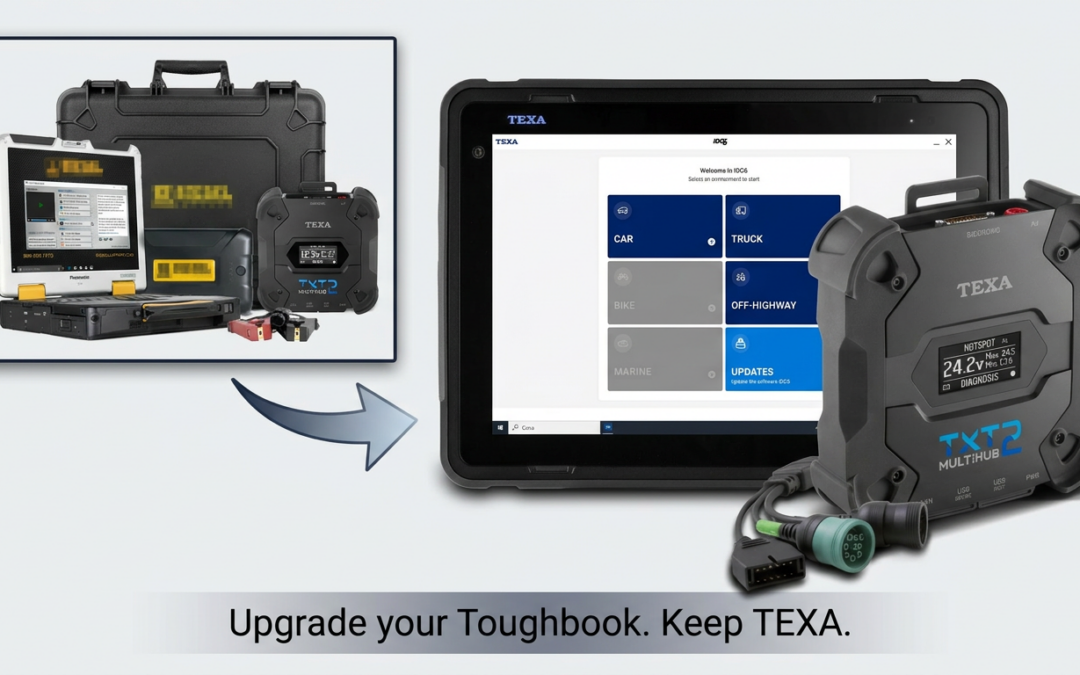
At DEFY DIAGNOSTICS, we’re keeping this simple and professional: if you’ve built your workflow around TEXA on a Toughbook (or any PC-based setup), you do not need to abandon your investment because someone else is stepping away. Instead, you can upgrade your PC-based TEXA unit to a purpose-built AXONE tablet and, right now, TEXA is making that upgrade far more valuable with a national promotion:
Upgrade your PC/Toughbook-based TEXA setup to an AXONE NEMO PLUS or AXONE NEMO VOICE and receive FREE TEXPACK updates for the licenses you already own.
Even better: there’s no trade-in required. You keep your old computer.
This post breaks down what the promotion includes, who it’s for, and why it’s the smartest “next step” for shops that want to stay with TEXA without getting forced into a tool change.
Are You Being Forced to Make a Change? You Don’t Have to Start Over
When a distributor stops supporting a product line, the messaging can quickly shift from helpful to high-pressure:
“You’ll be unsupported.”
“You need to switch.”
“Move now or get left behind.”
But what that often ignores is the reality in your shop: your TEXA licenses, VCI, and cables are still valuable. Your techs already know the workflow. Your investment is already made.
So rather than letting someone else’s business decision force your hand, this promotion gives you a clean path forward that preserves what matters most:
Your current TEXA ecosystem
Your tech’s familiarity and speed
Your ability to stay updated and supported
If you’re unsure whether the email you received truly applies to your setup, call us. We’ll help you verify your best next move without the sales pressure. Call: 864-803-3744 | Email: support@defydiagnostics.com
The TEXA Upgrade Promotion: What You Get (And Why It’s a Big Deal)
This is the core offer, and it’s strong—especially for shops sitting on PC-based TEXA systems.
When you upgrade from a Toughbook (or any PC) to an AXONE tablet, you receive:
12 months of TEXPACK software updates at no cost for all your current IDC5 or IDC6 licenses
Free transfer of your existing TEXA software from your current laptop/PC to the new tablet
A modern, shop-ready platform built specifically for diagnostic work (not a general-purpose laptop workaround)
Promotion window: Valid until 12.31.2026
The real win here is that the promotion is designed to protect what you’ve already invested in—you’re upgrading the platform, not buying your way back into diagnostic capability.
Yes, This Includes Toughbook Setups—and It’s Not Limited to Toughbooks
We’ll say it clearly because it’s a major point of confusion:
If you’re currently running TEXA on a Toughbook, this promotion is absolutely aimed at you.
If you’re running TEXA on any PC-based unit, you may also qualify.
And importantly:
No trade-in required You do not have to give up your old computer. Many shops choose to keep it as:
A backup workstation
A training station for new techs
A documentation/lookup PC
A “just in case” unit for busy weeks
Choose Your Upgrade: AXONE NEMO PLUS vs. AXONE NEMO VOICE
The promo applies when upgrading to either:
AXONE NEMO PLUS A powerful, modern tablet designed to replace the “laptop balancing act” with a cleaner, faster daily workflow.
AXONE NEMO VOICE A premium option for shops that want a top-tier tablet experience—especially if multiple techs rely on the tool all day.
Not sure which fits your shop? We’ll recommend the right tablet based on:
Your license package (IDC5 vs. IDC6, and categories like truck/OHW, etc.)
Your VCI model and how you connect in the bay
How many techs share the tool
What you want: “best value” vs. “best experience”
Why Upgrading from a PC/Toughbook to AXONE Makes Daily Work Easier
Most PC-based TEXA setups work—until they don’t. Tablets reduce friction that quietly steals time from every ticket.
Benefits that matter in real shop life
Keep your existing VCI and cables The promo details note you can continue using VCIs such as TXTs, Multihub, and Multihub 2—so you’re not rebuilding your hardware kit.
No more USB key AXONE tablets eliminate reliance on the external security key—less hassle, fewer “where is it?” moments.
Smoother support and troubleshooting Purpose-built hardware + aligned software typically means faster resolution when something goes sideways.
Warranty coverage considerations The promo details indicate the tablet warranty also covers your VCI, with options to extend after the first year—extra protection for equipment that earns its keep.
This is exactly why so many shops are moving away from “diagnostics on a laptop” and toward a dedicated diagnostic tablet: less fiddling, more fixing.
Already on a TEXA Tablet? We May Have Other Upgrade Offers Available
If you’re already using an AXONE tablet but want to step into a newer model, expand capability, or simply modernize your hardware, there are other upgrade offers available.
Because those options can vary by what you currently have, the fastest path is to contact us and we’ll map out the best deal.
Why Buy Through DEFY DIAGNOSTICS? Stability Matters Right Now
When the market gets noisy, you don’t just need a product—you need a partner who will still be here next month and next year.
When you purchase through DEFY DIAGNOSTICS, you get:
Help confirming promo eligibility
Guidance choosing AXONE NEMO PLUS vs. NEMO VOICE
Support transferring your TEXA software off the Toughbook/PC
A clear, shop-first recommendation (not a panic-driven switch)
Upgrade Your Toughbook the Smart Way—Without Switching Brands
If you like TEXA, rely on your current TEXA licenses, and don’t want to be pushed into a brand change, this is the cleanest move:
Upgrade your TEXA Toughbook (or any PC-based unit) to an AXONE NEMO PLUS or AXONE NEMO VOICE and get FREE TEXPACK updates for the licenses you already own—plus you keep your old computer (no trade-in required).
Call DEFY DIAGNOSTICS to lock in your upgrade path Phone: 864-803-3744 Email: support@defydiagnostics.com
When you reach out, include:
Your current setup (Toughbook or other PC)
Your VCI (TXTs / Multihub / Multihub 2)
Your licenses (IDC5 or IDC6, and what categories you use)
We’ll take it from there and make the upgrade straightforward.
Advanced Driver Assistance Systems (ADAS) aren’t a “new trend” anymore, they’re standard. From lane-keeping and blind-spot monitoring to adaptive cruise control and automatic emergency braking, nearly every car, truck, SUV, and even commercial vehicle relies on precise sensors to keep drivers safe and vehicles on the road.
Here’s the reality: Every time a collision center works on a modern vehicle (even for repairs unrelated to ADAS), there is a high chance that one or more ADAS components must be calibrated.
And that means shops have a decision to make:
Keep subletting ADAS calibrations, which is common but costly… or Invest in your own ADAS calibration system, creating a new profit center and keeping vehicles under your roof.
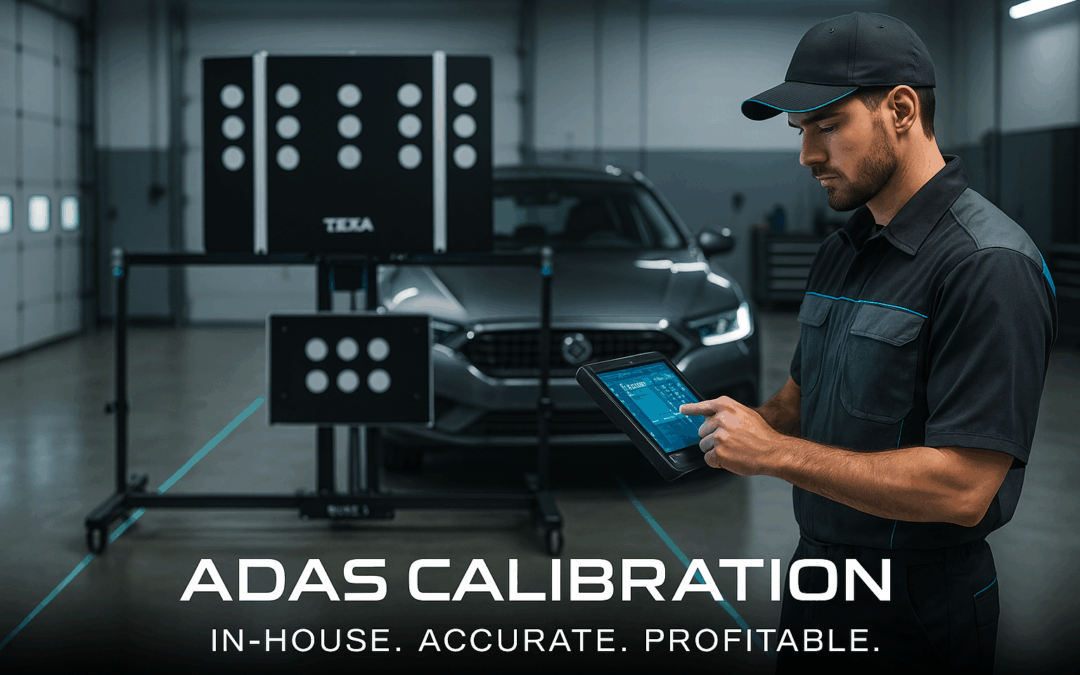
This article breaks down why ADAS calibrations matter, the pros and cons of subletting vs. doing them in-house, and why the TEXA RCCS3 (automotive) and TEXA CCS2 (heavy-duty/commercial) are becoming the go-to systems for collision centers ready to take control.
Why ADAS Calibrations Are Essential for Collision Centers
ADAS sensors are extremely sensitive. A simple bumper replacement, windshield change, alignment adjustment, or body panel repair can throw ADAS measurements off by millimeters, enough to cause false alerts, poor lane centering, or even a system failure.
Any of these common repairs can require an ADAS calibration:
Front or rear collision repair
Windshield replacement
Suspension/alignment work
Bumper or grille removal
Headlight replacement
Side-view mirror replacement
Frame or structural repairs
Roof repairs
Airbag deployment events
Missing a required calibration doesn’t just cause comebacks, it can create major liability for the shop. Insurance carriers and OEM procedures are clear: if you touch it, and it affects an ADAS sensor, you must document a calibration.
The Hidden Liability of Subletting ADAS Calibrations
Most collision centers that haven’t invested in ADAS equipment simply send the vehicle to a dealer or mobile technician. That solves the problem, but it creates new ones.
The Downsides of Subletting
1. Lost Revenue
You’re giving away one of the most profitable services in the repair industry. Calibration work typically bills $125–$350 per procedure, with many vehicles requiring multiple calibrations.
2. Delayed Cycle Times
Every time the car leaves your shop:
You lose control of the timeline
You wait for availability
Supplements and back-and-forth communication add delays
Insurers ask for documentation you must obtain from a third party
The vehicle may be “done,” but you can’t deliver.
3. Increased Liability
If the calibration is wrong or improperly documented, you are still the last shop that touched the vehicle.
Courts see repairs this way: If your shop performed the work, your shop is responsible, even if someone else calibrated it.
4. Customer Satisfaction Takes a Hit
Loaner car costs go up, wait times increase, and customers become frustrated.
The Advantages of Bringing ADAS Calibrations In-House
Collision centers across the country are realizing something important: ADAS calibrations aren’t a burden, they’re a revenue generator and competitive advantage.
1. Full Control Over Cycle Time
No more:
Waiting on a dealership
Missed appointments
Vehicles sitting for days ready-to-deliver except calibration
In-house calibration means same-day completion.
2. Immediate Revenue Capture
Most shops recover their investment within months, not years. Each calibration becomes a new profit source, not a cost of business.
3. Complete Documentation for Insurance
TEXA systems provide:
Photos
Measurement documentation
Pre/post-scan reports
Calibration verification results
This protects the shop and satisfies insurance requirements.
4. One System for the Entire Workflow
This is where TEXA stands out.
When you invest in a TEXA RCCS3 or CCS2 system, you’re not just buying calibration equipment. You’re getting a full diagnostic workstation.
The included TEXA tablet with IDC6 software performs:
Pre-scans
Post-scans
Full diagnostics across all major systems
ADAS calibrations
Live data and bi-directional tests
And unlike many competitors: No additional diagnostic subscriptions are required for pre/post scans. That alone can save a shop thousands per year.
Related Resource: ADAS Facility Requirements Every Shop Should Know
Before investing in an RCCS3 or CCS2 system, it’s important to understand the environmental and space requirements needed to perform OEM-accurate calibrations. We created a detailed guide that breaks down lighting, floor levelness, target distances, bay size, and real-world setup examples. For a full checklist of what your shop needs to be ADAS-ready, read our blog here: ADAS Calibration Facility Requirements
Why TEXA RCCS3 and CCS2 Are the Best ADAS Investments on the Market
TEXA RCCS3 (Automotive ADAS System)
Ideal for:
Collision centers
ADAS calibration facilities
Dealerships
Large fleets
High-volume body shops
Glass replacement companies
Key Features
Camera and radar calibrations for all major OEMs
Fully electronic height/leveling system
High-precision laser alignment
Targets for virtually every manufacturer (built in)
No paper targets to store, protect or purchase
Integrates directly with TEXA IDC6 diagnostic tablet
TEXA CCS2 (Commercial Truck ADAS System)
Perfect for shops working on:
Class 6–8 trucks
Medium-duty commercial vehicles
Buses
Municipal fleets
Key Features
Calibrates camera, radar, and LIDAR systems on trucks
Large, stable frame for HD vehicles
Laser alignment system
Designed specifically for collision and fleet heavy-duty applications
Subletting vs. Owning ADAS Equipment: The Comparison That Matters
ROI: Why Most Collision Centers Recover Their Investment Faster Than Expected
With average ADAS calibration pricing between $250–$850 per vehicle, it doesn’t take many jobs each week to pay off the equipment.
A typical collision center performing:
5–8 calibrations per week
At an average of $350 per calibration
Can recoup their investment in 3–6 months.
After that? Nearly pure profit, with complete control over cycle time.
The Bottom Line: ADAS Isn’t Optional. It’s a Business Opportunity.
Collision centers that ignore ADAS calibrations are falling behind. Collision centers that sublet ADAS calibrations are giving away money. Collision centers that bring ADAS in-house are positioning themselves as true full-service facilities.
With the TEXA RCCS3 (automotive) and TEXA CCS2 (heavy-duty/commercial), you get:
Precision calibration equipment
A full diagnostic workstation
Pre/post scanning
Multi-industry coverage
No additional diagnostic subscriptions
Full documentation for insurance
A profitable revenue stream
If you’re ready to modernize, reduce liability, and take full control of the repair process, now is the time to invest.
Want to See How TEXA ADAS Solutions Fit Your Shop?
At Defy Diagnostics, we help collision centers pick the right RCCS3 or CCS2 package, configure insurance-ready workflows, and integrate full ADAS capability into their repair process.