
Advanced Driver Assistance Systems (ADAS) aren’t a “new trend” anymore, they’re standard. From lane-keeping and blind-spot monitoring to adaptive cruise control and automatic emergency braking, nearly every car, truck, SUV, and even commercial vehicle relies on precise sensors to keep drivers safe and vehicles on the road.
Here’s the reality:
Every time a collision center works on a modern vehicle (even for repairs unrelated to ADAS), there is a high chance that one or more ADAS components must be calibrated.
And that means shops have a decision to make:
Keep subletting ADAS calibrations, which is common but costly…
or
Invest in your own ADAS calibration system, creating a new profit center and keeping vehicles under your roof.
This article breaks down why ADAS calibrations matter, the pros and cons of subletting vs. doing them in-house, and why the TEXA RCCS3 (automotive) and TEXA CCS2 (heavy-duty/commercial) are becoming the go-to systems for collision centers ready to take control.
Why ADAS Calibrations Are Essential for Collision Centers
ADAS sensors are extremely sensitive. A simple bumper replacement, windshield change, alignment adjustment, or body panel repair can throw ADAS measurements off by millimeters, enough to cause false alerts, poor lane centering, or even a system failure.
Any of these common repairs can require an ADAS calibration:
- Front or rear collision repair
- Windshield replacement
- Suspension/alignment work
- Bumper or grille removal
- Headlight replacement
- Side-view mirror replacement
- Frame or structural repairs
- Roof repairs
- Airbag deployment events
Missing a required calibration doesn’t just cause comebacks, it can create major liability for the shop. Insurance carriers and OEM procedures are clear: if you touch it, and it affects an ADAS sensor, you must document a calibration.
The Hidden Liability of Subletting ADAS Calibrations
Most collision centers that haven’t invested in ADAS equipment simply send the vehicle to a dealer or mobile technician. That solves the problem, but it creates new ones.
The Downsides of Subletting
1. Lost Revenue
You’re giving away one of the most profitable services in the repair industry.
Calibration work typically bills $125–$350 per procedure, with many vehicles requiring multiple calibrations.
2. Delayed Cycle Times
Every time the car leaves your shop:
- You lose control of the timeline
- You wait for availability
- Supplements and back-and-forth communication add delays
- Insurers ask for documentation you must obtain from a third party
The vehicle may be “done,” but you can’t deliver.
3. Increased Liability
If the calibration is wrong or improperly documented, you are still the last shop that touched the vehicle.
Courts see repairs this way:
If your shop performed the work, your shop is responsible, even if someone else calibrated it.
4. Customer Satisfaction Takes a Hit
Loaner car costs go up, wait times increase, and customers become frustrated.
The Advantages of Bringing ADAS Calibrations In-House
Collision centers across the country are realizing something important:
ADAS calibrations aren’t a burden, they’re a revenue generator and competitive advantage.
1. Full Control Over Cycle Time
No more:
- Waiting on a dealership
- Missed appointments
- Vehicles sitting for days ready-to-deliver except calibration
In-house calibration means same-day completion.
2. Immediate Revenue Capture
Most shops recover their investment within months, not years.
Each calibration becomes a new profit source, not a cost of business.
3. Complete Documentation for Insurance
TEXA systems provide:
- Photos
- Measurement documentation
- Pre/post-scan reports
- Calibration verification results
This protects the shop and satisfies insurance requirements.
4. One System for the Entire Workflow
This is where TEXA stands out.
When you invest in a TEXA RCCS3 or CCS2 system, you’re not just buying calibration equipment.
You’re getting a full diagnostic workstation.
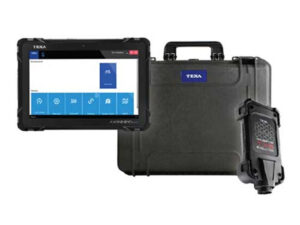
The included TEXA tablet with IDC6 software performs:
- Pre-scans
- Post-scans
- Full diagnostics across all major systems
- ADAS calibrations
- Live data and bi-directional tests
And unlike many competitors:
No additional diagnostic subscriptions are required for pre/post scans.
That alone can save a shop thousands per year.
Related Resource: ADAS Facility Requirements Every Shop Should Know
Before investing in an RCCS3 or CCS2 system, it’s important to understand the environmental and space requirements needed to perform OEM-accurate calibrations. We created a detailed guide that breaks down lighting, floor levelness, target distances, bay size, and real-world setup examples.
For a full checklist of what your shop needs to be ADAS-ready, read our blog here:
ADAS Calibration Facility Requirements
Why TEXA RCCS3 and CCS2 Are the Best ADAS Investments on the Market
TEXA RCCS3 (Automotive ADAS System)
Ideal for:
- Collision centers
- ADAS calibration facilities
- Dealerships
- Large fleets
- High-volume body shops
- Glass replacement companies
Key Features
- Camera and radar calibrations for all major OEMs
- Fully electronic height/leveling system
- High-precision laser alignment
- Targets for virtually every manufacturer (built in)
- No paper targets to store, protect or purchase
- Integrates directly with TEXA IDC6 diagnostic tablet

TEXA CCS2 (Commercial Truck ADAS System)
Perfect for shops working on:
- Class 6–8 trucks
- Medium-duty commercial vehicles
- Buses
- Municipal fleets
Key Features
- Calibrates camera, radar, and LIDAR systems on trucks
- Large, stable frame for HD vehicles
- Laser alignment system
- Designed specifically for collision and fleet heavy-duty applications

Subletting vs. Owning ADAS Equipment: The Comparison That Matters
PROS & CONS OF SUBLETTING ADAS CALIBRATIONS
| Subletting | Pros | Cons |
|---|---|---|
| Sending to dealer or mobile tech | ✔ No upfront investment | ✖ Long cycle times |
| ✖ Lost revenue | ||
| ✖ Documentation delays | ||
| ✖ Liability exposure | ||
| ✖ Inconsistent quality | ||
| ✖ Customers wait longer |
PROS & CONS OF BRINGING ADAS IN-HOUSE
| In-House Calibration | Pros | Cons |
|---|---|---|
| Using TEXA RCCS3 or CCS2 | ✔ Fastest cycle times | ✖ Requires initial investment (typically recovered quickly) |
| ✔ Keeps all revenue | ||
| ✔ Complete documentation | ||
| ✔ Eliminates liability gaps | ||
| ✔ Pre/post scans included with tablet | ||
| ✔ High-quality, repeatable measurements | ||
| ✔ Becomes a new profit center |
ROI: Why Most Collision Centers Recover Their Investment Faster Than Expected
With average ADAS calibration pricing between $250–$850 per vehicle, it doesn’t take many jobs each week to pay off the equipment.
A typical collision center performing:
- 5–8 calibrations per week
- At an average of $350 per calibration
Can recoup their investment in 3–6 months.
After that?
Nearly pure profit, with complete control over cycle time.
The Bottom Line: ADAS Isn’t Optional. It’s a Business Opportunity.
Collision centers that ignore ADAS calibrations are falling behind.
Collision centers that sublet ADAS calibrations are giving away money.
Collision centers that bring ADAS in-house are positioning themselves as true full-service facilities.
With the TEXA RCCS3 (automotive) and TEXA CCS2 (heavy-duty/commercial), you get:
- Precision calibration equipment
- A full diagnostic workstation
- Pre/post scanning
- Multi-industry coverage
- No additional diagnostic subscriptions
- Full documentation for insurance
- A profitable revenue stream
If you’re ready to modernize, reduce liability, and take full control of the repair process, now is the time to invest.
Want to See How TEXA ADAS Solutions Fit Your Shop?
At Defy Diagnostics, we help collision centers pick the right RCCS3 or CCS2 package, configure insurance-ready workflows, and integrate full ADAS capability into their repair process.