
(And How to Choose the Right Scanner for Your Shop, Fleet, or Facility)
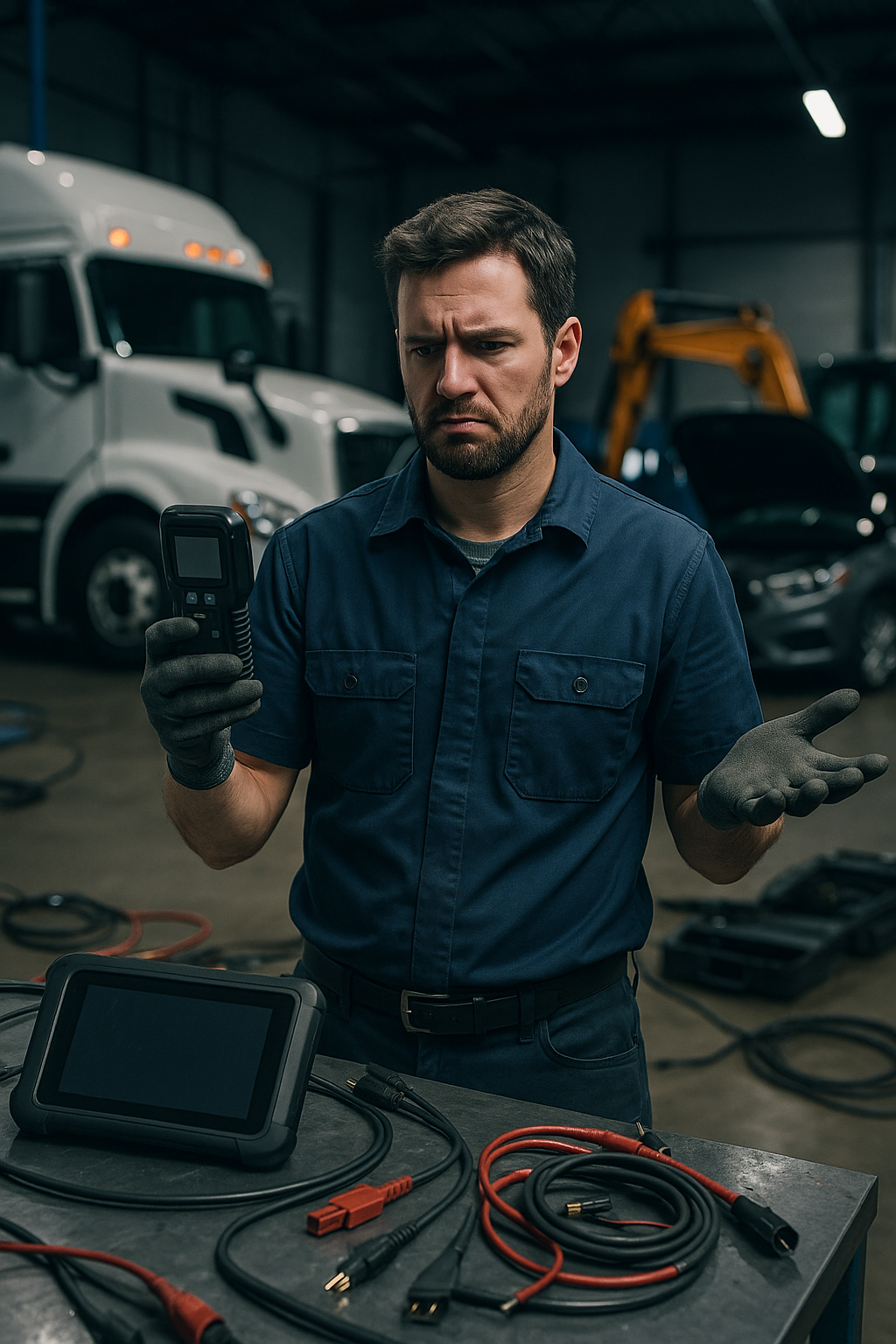
Imagine, your the owner of a busy diesel repair shop and you dropped nearly $8,000 on a scanner that you thought would “do it all.” Two months in, it couldn’t connect to half the fleet. No support. No refunds. The scanner now collects dust, and the techs are back to guessing.
Choosing the wrong diagnostic tool isn’t just a bad purchase. It’s a productivity killer. It leads to frustrated technicians, missed revenue, and a shop floor full of undiagnosed problems.
Before you invest, make sure you’re not falling into these common traps. Whether you run a high-volume automotive shop, a municipal fleet garage, or a mobile off-highway repair unit, this guide will save you time, money, and major headaches.
Mistake #1: Focusing Only on the Upfront Price
The Problem: That “cheap” scanner can cost you more in the long run.
Why It Matters: Budget tools often lack essential features, come with surprise costs, or wear out quickly. Think: constant cable replacements, unsupported vehicles, or upgrade fees you didn’t see coming.
Smart Move: Calculate total cost of ownership, including software renewals, accessories, downtime risk, and long-term durability.
Mistake #2: Ignoring Software Coverage
The Problem: Your scanner doesn’t talk to the vehicles you actually service.
Why It Matters: No coverage means more guesswork, delays, and sending jobs to someone else.
Smart Move: Always verify software coverage by year, make, model, and system. Ask vendors for demo reports. Don’t assume, confirm.
Mistake #3: Overlooking Subscription Requirements
The Problem: You bought the tool, but now you’re hit with hidden annual fees.
Why It Matters: Some tools stop working or lose access to new vehicles if you skip renewals. That “one-time purchase” might be a yearly commitment.
Smart Move: Know exactly what’s included in Year 1, how much renewals cost, and what happens if you skip them.
Mistake #4: Buying Consumer-Grade for Professional Use
The Problem: That scanner on Amazon says it’s “pro-Grade”, but it’s not.
Why It Matters: DIY tools rarely offer bi-directional tests, advanced system access, or durable build quality. In a professional environment, they fail fast.
Smart Move: Invest in gear made for techs who work under hoods, not influencers in the garage. Look for tools built to last and tested in the field.
Mistake #5: Not Considering Future Needs
The Problem: You bought for what you service today, and not what’s coming tomorrow.
Why It Matters: If you expand to trucks, OHW, or marine next year, you’ll be buying another tool.
Smart Move: Choose scalable platforms with multi-industry modules. Tools that grow with you so you’re ready for whatever rolls into the bay.
Mistake #6: Underestimating the Importance of Support
The Problem: No number to call. No one picks up. Forums full of guesses.
Why It Matters: When a rig is down, waiting days for help isn’t an option.
Smart Move: Choose a partner, not just a product. Look for U.S.-based support from real techs who’ve used the tools themselves.
Mistake #7: Skipping Training or Setup Help
The Problem: Your new tool arrives… and no one knows how to use it.
Why It Matters: Tools that sit on shelves don’t fix vehicles. Frustrated techs stop trying.
Smart Move: Look for guided setup, hands-on training, and clear onboarding resources.
Mistake #8: Buying from Non-Authorized Sellers
The Problem: That “deal” on eBay comes with outdated software and no warranty.
Why It Matters: Tools from gray markets may be locked, unsupported, or even counterfeit.
Smart Move: Buy from authorized distributors. Make sure support and warranty are part of the package, not just the box.
Mistake #9: Ignoring ADAS Functionality and Ability
The Problem: Your new tool can’t calibrate an ADAS system or perform a simple reset
Why It Matters: Modern diagnostics don’t happen in silos. Integration matters.
Smart Move: Invest in a platform that supports modular upgrade, from ADAS to A/C to diesel aftertreatment.
Mistake #10: Not Protecting Your Investment
The Problem: Tool gets dropped. Cable gets lost. Subscription expires and now you’re out $6K.
Why It Matters: Diagnostic tools cost real money. Replacing them shouldn’t be inevitable.
Smart Move: Choose gear with rugged build quality, protective cases, and optional lifetime warranties.
Final Thoughts: Don’t Buy Blind. Talk to a Pro.
Buying the right diagnostic tool shouldn’t feel like a gamble. It should feel like a confident investment in your shop’s future.
At Defy, we help you get it right the first time no guesswork, no games, no downtime.
Key Takeaways
- Upfront price is just the beginning, know your total cost.
- Always check software coverage and subscription terms.
- Don’t settle for DIY-grade tools in a professional shop.
- Make sure your tool scales with your business.
- Support and training can make or break your investment.
- Buy authorized. Buy smart. Protect your investment.
Join the Defy Family CLICK HERE
Stay ahead of the curve with insider diagnostics tips, tech support hacks, and exclusive offers.


