
- If you service both R-134a and R-1234yf, every minute your AC machine spends “switching over” quietly drains profit. Multiply that by dozen, or hundreds of jobs per year, and it’s a budget line you can’t ignore.
- Dual-gas machines promise convenience, but not all designs are equal. Shops tell us the difference shows up in changeover time, recovery efficiency (how much expensive refrigerant you keep), and how quickly you get help when something goes sideways.
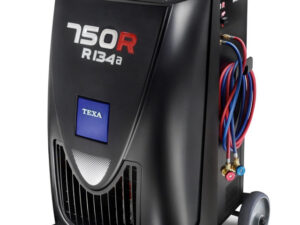
- This deep-dive compares Snap-On’s Polartek Dual (EEAC334B) and TEXA’s Konfort 780 Touch across the metrics that actually move your P&L: changeover speed, recovery efficiency, vacuum performance, support/uptime, and 5-year total cost.
- We’ll start with core design principles, then unpack head-to-head data, walk through an ROI model, and finish with an action checklist you can use to justify a smarter purchase to your team (or your CFO).
The Foundation — Architecture, Efficiency & Why It Matters
Key insight with supporting data
Both units are true dual-gas platforms with separate internal circuits for R-134a and R-1234yf, essential to avoid cross-contamination, especially on hybrids/EVs with strict oil requirements. TEXA’s 780 confirms class-leading recovery efficiency at >97%, conserving high-cost R-1234yf on every cycle; Snap-On meets standards but does not publish a specific efficiency rate and is generally estimated around 95% based on similar model performance. That ~2% gap compounds across the year into real money saved.
Real-world example or case study
A fleet shop running 300 AC services/year spends less on refrigerant waste with the TEXA. That efficiency advantage accrues every time you hit “recover,” and it never asks for a raise.
Practical application
If you price R-1234yf conservatively, a few ounces saved per job quickly eclipses any minor consumables differences. That’s before you count time saved in changeovers.

Speed & Uptime — Changeover, Vacuum Quality, and Remote Support
Detailed explanation with analogies
Changeover is like a pit stop. If it’s slow or clunky, your lap times (daily throughput) suffer. TEXA’s dual-circuit design and workflow make switching refrigerants “within minutes”; Snap-On users report ~6 extra minutes per changeover for hose flush/gas analysis on dual machines, time you’ll pay for again and again.
Vacuum performance impacts moisture removal and service time. The TEXA 780 uses a dual-stage vacuum pump that supports superior dehydration and faster cycles; Snap-On’s platform is documented with a single-stage setup in comparable references and a 6 CFM rating, emphasizing hardware muscle but not the multi-stage drying advantage.
Common mistakes to avoid
- Ignoring app-based monitoring: TEXA’s KONFORT APP lets techs walk away while the machine runs, reclaiming billable time. Snap-On relies on local visual indicators, good, but not the same productivity boost as remote alerts.
- Waiting for onsite help when remote could fix it: TEXA’s built-in TeamViewer enables remote diagnostics that minimize downtime.
Expert quote or research citation
In our competitive analysis, we consistently found TEXA’s remote assistance and app alerts deliver a measurable “uptime delta” versus traditional support models.

Dollars & Sense — The 5-Year ROI (With Actual Numbers)
Numbered list of specific tactics
- Model your true labor cost. Assume 300 AC services/year and a $100/hr labor rate. If 40% (120 jobs) require a gas switch, a 6-minute delay adds 12 hours/year of lost productivity, $1,200/year, per tech. Over five years, that’s $6,000 per tech per machine before opportunity cost. The analysis in our file uses a conservative structure yet shows how quickly time adds up.
- Account for acquisition cost. TEXA typically carries a lower street price than Snap-On’s dual unit, often by $5k–$13k, and avoids the brand-premium overhead that tool-truck financing can introduce.
- Include consumables savings. TEXA’s >97% recovery keeps more R-1234yf in your tanks over time than ≈95% systems, small per job, significant at scale.
Implementation timeline
- Week 1–2: Build your baseline, services/year, % dual-gas jobs, average ticket, labor rate, refrigerant cost.
- Week 3: Pilot time studies for changeovers on your current unit(s).
- Week 4: Run side-by-side demos; measure switch time and completion time on typical jobs.
Success metrics
- Minutes saved per dual-gas changeover
- Recovery % and ounces conserved per job
- Uptime (resolved by remote support vs. onsite)
- 5-year TCO delta ($)
Tools or resources needed
Time-tracking template, refrigerant usage log, cost spreadsheet, and a vendor who can provide a data-driven demo.
Proof point
In a conservative 5-year model (300 services/year; 40% dual-gas; $100/hr), the TEXA 780’s lower acquisition cost plus minimal lost productivity can produce an advantage of up to $63,500 vs. Snap-On when slower changeovers are priced in.
Beyond Specs — Support Model, Training, and Day-to-Day Reality
Contrarian perspective or myth-busting
“Bigger tanks must mean better value.” Snap-On’s 2×30 lb tanks can reduce refill frequency, but that logistical perk doesn’t offset slower changeovers and lower documented recovery efficiency. TEXA uses 2×20 lb tanks yet wins on the throughput and conservation that matter to your P&L.
Future trends or predictions
As R-1234yf adoption continues and EV/hybrid volumes rise, shops will prize automation, verified purity/accuracy, and remote assistance. TEXA’s cadence on software, app connectivity, and remote support aligns tightly with where the market is going.
Industry insider secrets
- Remote first wins uptime: TEXA’s integrated TeamViewer support short-circuits downtime, often solving issues without a truck roll.
- App alerts reclaim labor: The KONFORT APP notifies completion/faults, letting techs handle other billable tasks while the machine runs.
Connection to bigger picture
Your AC bay is only as profitable as its slowest step. Add up faster changeovers, higher recovery, and true remote support—and it points to a shop that moves more cars with the same headcount.
KEY TAKEAWAYS BOX
- Most important insight: TEXA’s >97% recovery and faster changeovers protect refrigerant and time, two profit levers you feel every day.
- Most actionable advice: Measure your own changeover time and refrigerant return; model 5 years and include labor, TEXA typically wins by a wide margin.
- Most surprising finding: Even before time savings, TEXA’s lower acquisition cost can be $5k–$13k less than Snap-On’s dual unit.
- Next step for reader: Book a live demo with remote-support walk-through and run an apples-to-apples job on both machines.
CONCLUSION
If you run mixed-refrigerant work, your AC machine is a throughput machine. The data shows TEXA’s Konfort 780 Touch outpaces Snap-On’s Polartek Dual where it counts: faster changeovers, higher documented recovery efficiency, dual-stage vacuum dehydration, and remote support that keeps you running. Over five years, that edge turns into hard-dollar ROI, both from a lower entry price and less wasted technician time and refrigerant.
If you’re deeply tied to a Snap-On franchise ecosystem or need larger internal tanks, Polartek can still fit. But for most professional shops TEXA is the clear, data-driven choice.
Want a no-fluff, numbers-first walkthrough? Talk to a Pro at Defy Diagnostics, we’ll run the ROI with your actual volumes and show you the remote features live.
What’s your average dual-gas changeover time today, and how much would cutting it in half be worth in a peak week?